

Concrete vs Fibreglass Pool Durability
Cracking, Lifespan & Structural Issues Explained
Table of Contents
If you’re researching:
Do fibreglass pools crack?
Do concrete pools crack?
Which pool lasts longer — concrete or fibreglass?
What are the real structural problems?
You’re not comparing features anymore.
You’re protecting a six-figure investment.
This guide explains the real durability differences between concrete and fibreglass pools in NZ conditions — without marketing exaggeration.
1. Do Fibreglass Pools Crack?
Yes — fibreglass pools can crack, but it’s important to distinguish between surface cracking and structural failure.
Common fibreglass cracking issues include:
Gelcoat crazing (fine surface cracks)
Stress fractures around steps or corners
Cosmetic cracking from impact damage
These are usually surface-level and repairable.
More serious fibreglass pool structural issues occur when:
Backfilling is poorly compacted
Drainage is inadequate
Hydrostatic pressure builds beneath the shell
The pool is emptied for extended periods
For example, in high-groundwater Auckland suburbs, fibreglass pools installed without proper hydrostatic relief can experience upward pressure. This can cause distortion or lifting.
Structural shell failure is uncommon — but when it happens, it is usually installation-related.
2. Do Concrete Pools Crack?
Yes — concrete pools crack too.
Concrete is extremely strong in compression but rigid. It does not flex. That means:
Hairline shrinkage cracks are common
Thermal expansion can create minor cracking
Ground movement can cause structural cracks
Not all cracks are structural. Many are cosmetic surface cracks in plaster.
However, structural cracking in concrete pools is more serious than cosmetic fibreglass crazing.
Concrete pool structural problems typically arise from:
Inadequate steel reinforcement
Poor engineering design
Hydrostatic pressure under the slab
Improper curing
For example, on a sloped section with retaining walls, insufficient reinforcement can lead to stress fractures in the shell.
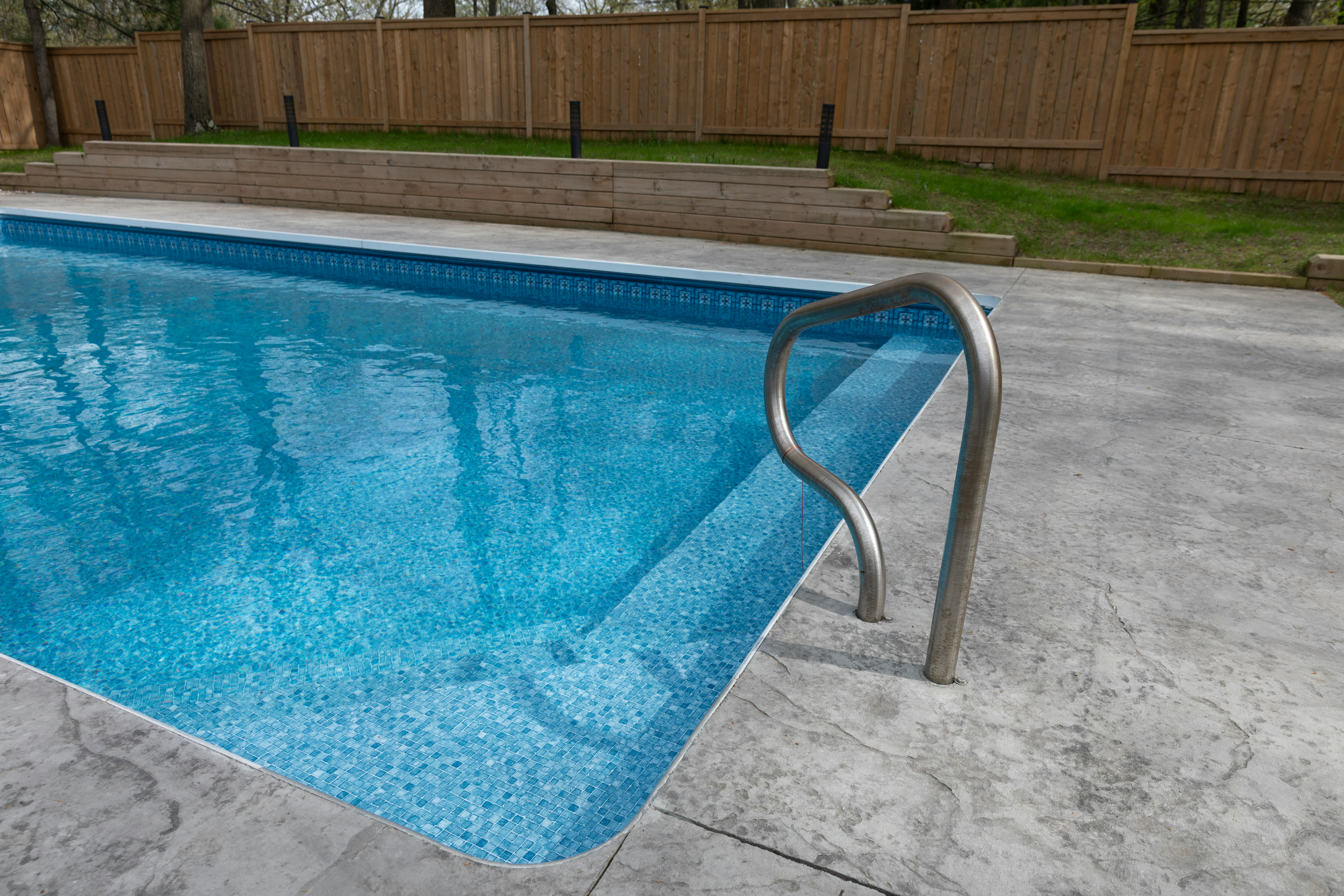
A properly installed fibreglass pool in NZ generally lasts:
25–40+ years
The shell can last longer, but the gelcoat surface may dull or require refinishing over time.
Key factors affecting fibreglass pool lifespan:
Consistent water chemistry
Proper drainage around the pool
Avoiding prolonged empty periods
Preventing groundwater pressure build-up
Many fibreglass pool warranties in NZ offer:
20–30 years structural coverage
Shorter gelcoat warranties (often pro-rated)
Warranty claims are most commonly denied due to improper water chemistry.
4. Concrete Pool Lifespan
Concrete pools are often described as lifetime structures.
Structurally, a well-engineered concrete pool can last 50+ years.
However, the interior finish (plaster, quartz, pebble) typically requires resurfacing every 10–20 years depending on water balance and use.
That means:
The structure lasts decades
The surface is a maintenance cycle
Concrete does not rely on a gelcoat layer. It is less chemically sensitive than fibreglass, though poor water care will still damage surfaces over time.
From a purely structural standpoint, concrete pools generally have the longer lifespan.
5. Which Pool Lasts Longer: Concrete or Fibreglass?
Structurally: concrete has the higher theoretical lifespan.
Practically:
A well-installed fibreglass pool can last several decades with minimal structural issues.
A well-built concrete pool can outlast fibreglass structurally but will require resurfacing.
The more important variable is not material. It is:
Engineering quality
Installation standards
Site preparation
Ongoing maintenance
Material sets the ceiling. Installation determines the outcome.
The most common fibreglass pool structural issues include:
Shell distortion from poor backfilling
Lifting due to groundwater pressure
Inadequate base preparation
Stress around stair mouldings
Fibreglass pools depend heavily on correct ground conditions and installation.
On flat, well-drained sites, they perform extremely well.
On complex or high-water-table sites, they require careful drainage planning.
7. Concrete Pool Structural Problems
Concrete pool structural problems typically involve:
Cracking from ground movement
Steel corrosion if waterproofing fails
Structural stress on sloping or retaining-integrated builds
Unlike fibreglass, concrete pools are engineered specifically for the site. This makes them more adaptable to:
Sloping sections
Integrated retaining walls
Architecturally complex designs
Because concrete is reinforced steel and shotcrete, it provides greater inherent structural capacity.
However, if engineering is poor, structural cracking is more expensive to correct than gelcoat repair in fibreglass.
8. Fibreglass Pool Warranty Issues
Fibreglass warranties often look impressive on paper.
However, they are strict.
Common causes of fibreglass pool warranty disputes:
Unbalanced pH or chemical levels
Failure to maintain minimum water levels
Improper drainage
Unauthorised modifications
Structural warranties are long, but surface warranties are often conditional.
Homeowners must actively maintain compliance.
Concrete pool repair costs vary depending on severity.
Typical interventions include:
Crack injection
Tile replacement
Surface resurfacing (every 10–20 years)
Resurfacing is a predictable lifecycle cost.
Major structural repair is rare in properly engineered builds but can be expensive if required.
10. Fibreglass Pool Repair vs Concrete
Fibreglass repair:
Gelcoat repairs are relatively straightforward
Colour matching may be noticeable
Structural repair requires specialist composite work
Concrete repair:
Surface refinishing is expected over time
Structural crack repair is more invasive
Neither material is immune from problems.
They fail differently.
Fibreglass tends to fail through installation or groundwater mismanagement.
Concrete tends to fail through engineering or reinforcement deficiencies.
11. Want a Professional View on What Pool Type Suites you Best?
Poolpal exists before you talk to builders.
Not to sell. Not to rush. Not to push quotes.
But to provide:
Independent guidance
Transparent comparisons
Clarity on cost, process, and risk
A controlled, low‑stress decision process
For families who want a premium pool built the right way, confidence comes from clarity.